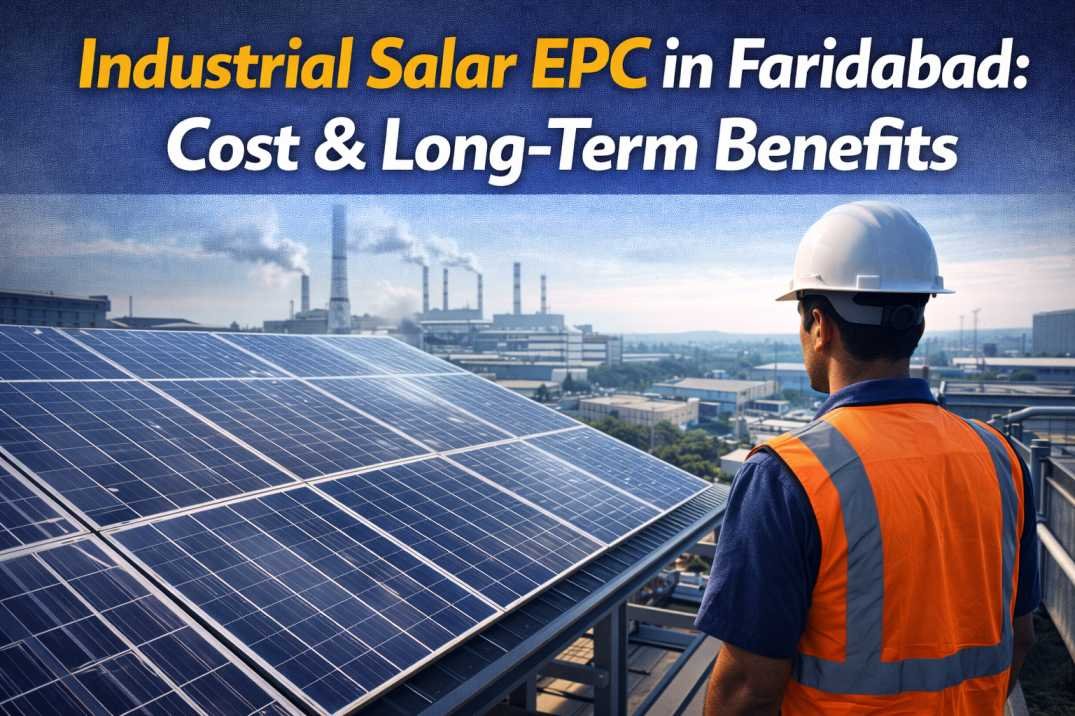
Faridabad has emerged as one of North India’s major industrial hubs, home to manufacturing units, factories, warehouses, and processing plants. With rising electricity tariffs and increasing environmental regulations, industries are actively seeking cost-effective and sustainable energy alternatives. One of the most reliable solutions is investing in industrial solar EPC in Faridabad.
Industrial solar power is not just an environmental initiative; it is a strategic financial decision. By adopting solar energy through a professional EPC provider, industries can significantly reduce operational costs, improve long-term profitability, and strengthen their sustainability profile.
This comprehensive guide explains what industrial solar EPC means, how much it costs, and the long-term benefits for industrial units in Faridabad.
Understanding Industrial Solar EPC
EPC stands for Engineering, Procurement, and Construction. In the context of solar projects, EPC refers to a turnkey solution where a company handles every stage of the project, including:
Site assessment
System design and engineering
Procurement of solar panels and inverters
Installation and commissioning
Testing and grid connectivity
Performance monitoring
Choosing an experienced industrial solar EPC Faridabad provider ensures the entire project is professionally executed from start to finish.
Why Industrial Solar Is Growing in Faridabad
Faridabad’s industrial landscape includes automotive manufacturing, engineering units, textiles, packaging, and heavy machinery. These industries consume large amounts of electricity.
Key factors driving industrial solar adoption include:
High grid electricity tariffs
Frequent tariff revisions
Government support for renewable energy
Net metering policies
Environmental compliance requirements
Corporate sustainability goals
Solar power offers predictable energy costs and protection against rising tariffs.
Components of an Industrial Solar EPC Project
Site Feasibility Study
The EPC company conducts a detailed assessment of:
Roof strength and area
Shadow analysis
Energy consumption patterns
Available grid infrastructure
This determines the optimal system capacity.
Engineering and System Design
Engineers design the system based on:
Load requirements
Solar irradiation levels in Faridabad
Panel tilt and orientation
Structural considerations
Procurement of Equipment
High-quality components are sourced, including:
Solar modules
Inverters
Mounting structures
Cabling and connectors
Monitoring systems
Construction and Installation
Installation includes:
Mounting solar panels
Electrical wiring
Inverter configuration
Safety testing
Commissioning and Testing
After installation, performance tests ensure:
Proper voltage levels
Stable grid connection
Maximum energy output
Industrial Solar EPC Cost in Faridabad
The cost of industrial solar EPC in Faridabad depends on several factors:
System capacity in kilowatts or megawatts
Quality of solar modules and inverters
Roof type or ground-mounted installation
Structural reinforcement requirements
Distance from grid connection point
On average, industrial solar systems range from moderate to large-scale investments. However, economies of scale reduce per-kilowatt costs for larger installations.
Factors Influencing Project Cost
Type of Solar Panels
High-efficiency panels cost more initially but generate higher output over time.
Inverter Quality
Industrial-grade inverters ensure stable performance and durability.
Mounting Structure
Rooftop installations differ from ground-mounted systems in structural requirements.
Monitoring Systems
Advanced monitoring improves efficiency but adds to initial cost.
While upfront investment may seem significant, long-term savings outweigh initial expenses.
Return on Investment
Industrial solar projects typically offer payback periods between four to six years, depending on system size and electricity consumption.
After the payback period, industries benefit from nearly free electricity for the remaining lifespan of the system, which is generally 25 years or more.
Electricity Bill Reduction
Solar power offsets grid electricity consumption during peak sunlight hours. Industries with daytime operations benefit significantly.
Reduced dependence on grid supply stabilizes operational expenses.
Protection Against Rising Tariffs
Electricity tariffs tend to increase over time. Solar power provides cost predictability and shields industries from fluctuating energy prices.
Tax and Financial Benefits
Industries installing solar power systems may benefit from:
Accelerated depreciation
Tax incentives
Government subsidies
Renewable energy certificates
These financial advantages improve project viability.
Environmental and Corporate Benefits
Reduced Carbon Footprint
Solar energy significantly lowers greenhouse gas emissions.
Improved Brand Image
Companies using renewable energy strengthen their corporate social responsibility profile.
Regulatory Compliance
Solar adoption helps industries meet environmental norms and sustainability mandates.
Operational Stability
Solar systems reduce dependency on grid outages and voltage fluctuations.
Long-Term Performance and Maintenance
Industrial solar systems require minimal maintenance.
Routine maintenance includes:
Panel cleaning
Electrical inspection
Performance monitoring
Inverter servicing
A professional industrial solar EPC Faridabad provider also offers operation and maintenance services to ensure consistent output.
Net Metering Benefits
Net metering allows industries to export excess solar power to the grid.
This mechanism:
Reduces net electricity bills
Improves financial returns
Enhances system utilization
An experienced EPC partner manages documentation and approvals for smooth net metering integration.
Scalability of Industrial Solar Systems
Solar installations can be scaled as business operations grow.
Industries can start with moderate capacity and expand later based on energy requirements.
Risk Mitigation Through Professional EPC
Choosing a qualified industrial solar EPC Faridabad provider reduces risks such as:
Improper system design
Substandard equipment
Electrical hazards
Poor installation practices
Professional engineering ensures safety, durability, and efficiency.
Comparing Solar with Conventional Power
Grid Power
Subject to tariff increases
Vulnerable to outages
Dependent on fossil fuels
Solar Power
Fixed long-term cost
Environmentally sustainable
Low maintenance
Energy independence
Solar clearly offers superior long-term advantages.
Impact on Industrial Competitiveness
Energy costs significantly impact manufacturing expenses.
Lower power bills improve profit margins and pricing competitiveness.
Industries investing in solar gain an operational edge in competitive markets.
Challenges and How EPC Companies Address Them
Roof Load Capacity
Structural reinforcement may be required for older buildings.
Space Constraints
Smart layout design maximizes output even with limited roof area.
Grid Synchronization
Technical expertise ensures seamless integration.
Professional EPC planning eliminates these challenges.
Future Outlook of Industrial Solar in Faridabad
With increasing policy support and falling solar technology costs, industrial solar adoption is expected to grow rapidly.
Advancements such as:
High-efficiency bifacial panels
Energy storage systems
Smart monitoring software
Hybrid solar solutions
will further improve performance and reliability.
Industries investing early gain long-term strategic advantages.
Why Choose a Turnkey EPC Model
A turnkey EPC approach ensures:
Single-point responsibility
Faster project execution
Cost transparency
Quality assurance
After-sales support
This reduces coordination complexity and ensures accountability.
Conclusion
Industrial solar EPC in Faridabad is more than an energy solution — it is a long-term investment in cost savings, sustainability, and operational efficiency.
While initial installation requires capital, the financial returns, tax benefits, reduced electricity bills, and environmental impact make it a highly profitable decision for industrial units.
By partnering with a reliable industrial solar EPC Faridabad provider, industries can secure stable energy costs for decades while contributing to a greener future.
Solar power offers predictable returns, environmental responsibility, and competitive advantage. For industries in Faridabad, now is the right time to invest in solar energy infrastructure and secure long-term growth.