
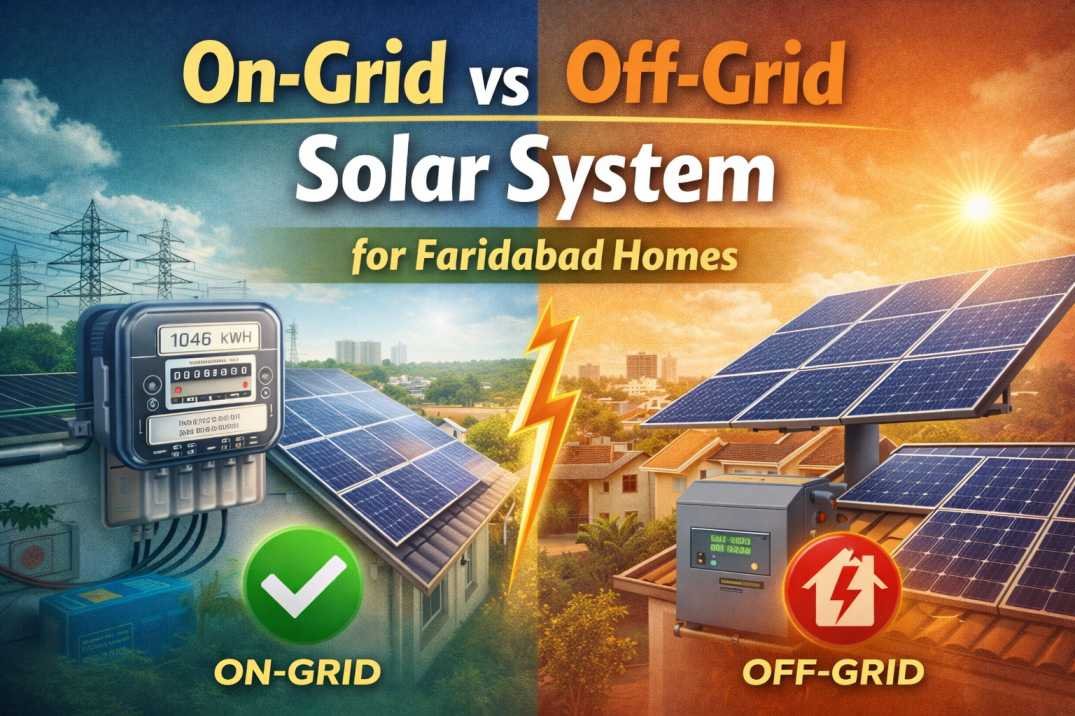
Faridabad, located in Haryana’s rapidly developing industrial belt, experiences high electricity demand throughout the year. With rising power tariffs, frequent peak-hour load pressure, and growing awareness about sustainability, homeowners are increasingly exploring solar energy. One of the most common questions people ask is whether to choose an on-grid or off-grid system.
Understanding the difference between these two systems is essential before investing in rooftop solar. If you are planning to install an on-grid solar system for home or considering an independent off-grid setup, this detailed guide will help you make an informed decision based on cost, reliability, space, and energy needs.
Understanding Solar Systems for Homes
A solar power system converts sunlight into electricity using solar panels. However, the way this electricity is stored and distributed determines whether the system is on-grid or off-grid.
On-Grid Solar System
An on-grid solar system for home is connected directly to the electricity grid. It generates power during the day and supplies it to your home. If your panels produce more electricity than you consume, the excess is exported to the grid through net metering. When solar production is low, such as at night, electricity is drawn from the grid.
Off-Grid Solar System
An off-grid system operates independently of the utility grid. It uses batteries to store excess electricity generated during the day. This stored energy powers your home at night or during cloudy days.
Both systems have advantages and limitations, especially in a city like Faridabad.
Electricity Scenario in Faridabad
Faridabad homes typically face high electricity bills due to heavy air-conditioner usage during summer months. While power supply in urban sectors is relatively stable, occasional outages still occur, especially during peak demand or maintenance work.
Choosing between an on-grid solar system for home and an off-grid solution depends on whether you prioritize cost savings or power backup.
How an On-Grid Solar System Works
An on-grid solar system includes:
Solar panels
Grid-tied inverter
Net meter
Mounting structure
Safety components
During daytime, solar panels generate electricity. The inverter converts DC power into AC power usable in your home. If production exceeds consumption, surplus energy flows to the grid, and you receive credit under net metering policies.
At night, when panels are inactive, the grid supplies electricity as usual.
Advantages of On-Grid Solar System for Home
Lower Initial Investment
On-grid systems do not require batteries, making them more affordable compared to off-grid systems.
Reduced Electricity Bills
Net metering allows you to offset electricity costs significantly. Many Faridabad homeowners see reductions of 70–90 percent in their monthly bills.
High Efficiency
Since there is no battery storage, energy losses are minimal.
Low Maintenance
Without batteries, maintenance requirements are reduced.
Government Subsidies
Residential on-grid systems often qualify for central and state subsidies, lowering overall project cost.
Limitations of On-Grid Solar Systems
No Power During Outages
If the grid fails, the on-grid system shuts down for safety reasons. This means you will not have solar power during a blackout.
Dependence on Grid Stability
The system works efficiently only when the grid is operational.
How an Off-Grid Solar System Works
An off-grid system includes:
Solar panels
Off-grid inverter
Battery bank
Charge controller
Mounting structure
Solar panels generate electricity during the day. The charge controller directs power to batteries for storage. At night or during cloudy weather, stored energy is used to power appliances.
Advantages of Off-Grid Solar Systems
Complete Energy Independence
Off-grid systems operate without reliance on utility supply.
Power Backup
You have uninterrupted electricity even during grid outages.
Suitable for Remote Areas
Ideal for homes located where grid connectivity is unreliable.
Limitations of Off-Grid Solar Systems
Higher Initial Cost
Battery banks significantly increase investment.
Maintenance Requirements
Batteries require periodic maintenance and eventual replacement.
Lower Overall Efficiency
Energy conversion and storage losses reduce total efficiency.
Space Requirements
Battery banks require additional installation space.
Cost Comparison in Faridabad
The cost of an on-grid solar system for home in Faridabad generally ranges lower than an equivalent off-grid setup because batteries are expensive.
On-grid system cost factors include:
System capacity (kW)
Panel quality
Inverter type
Installation complexity
Off-grid systems include additional cost for:
Battery bank
Battery replacement cycle
Maintenance
For urban Faridabad homes with stable electricity supply, on-grid systems are typically more cost-effective.
Which System is Better for Faridabad Homes
The decision depends on your priorities.
If your goal is to reduce electricity bills significantly and you experience minimal power cuts, an on-grid solar system for home is the ideal choice.
If your area faces frequent outages and you require uninterrupted supply for essential appliances, an off-grid or hybrid system may be better.
Hybrid systems combine grid connection with battery backup, offering a middle-ground solution.
Net Metering in Faridabad
Net metering plays a crucial role in maximizing returns from an on-grid solar system for home. Under this system:
Excess electricity exported to the grid is recorded.
You receive credits that offset your monthly bill.
You pay only for net consumption.
This policy makes on-grid systems financially attractive for homeowners.
Return on Investment
In Faridabad, homeowners installing an on-grid solar system for home often recover their investment within 4–6 years, depending on consumption and subsidy eligibility.
Off-grid systems have longer payback periods due to battery costs.
Maintenance Considerations
On-Grid Maintenance
Panel cleaning every few months
Annual inverter inspection
Minimal servicing
Off-Grid Maintenance
Panel cleaning
Battery maintenance
Battery replacement after 5–8 years
Regular inspection of charge controllers
Maintenance costs are generally lower for on-grid systems.
Environmental Impact
Both systems reduce carbon footprint and reliance on fossil fuels. However, off-grid battery disposal must be handled responsibly to minimize environmental harm.
Roof Space Requirements
Both systems require adequate rooftop space with proper sunlight exposure. However, off-grid systems need additional indoor space for battery banks.
Energy Consumption Assessment
Before choosing a system, calculate:
Monthly electricity units consumed
Peak power requirements
Essential load during outages
A professional solar consultant can conduct a load assessment to recommend suitable system capacity.
When to Choose an On-Grid Solar System for Home
Choose on-grid if:
You live in urban Faridabad with stable power supply
Your main goal is bill reduction
You want lower upfront investment
You prefer low maintenance
When to Choose Off-Grid
Choose off-grid if:
You experience frequent power outages
You want energy independence
Your property is in a remote area
Backup power is critical
Future of Residential Solar in Faridabad
With increasing awareness, government incentives, and rising electricity tariffs, solar adoption in Faridabad is growing steadily. On-grid systems are becoming the preferred choice due to economic benefits.
Hybrid systems are also gaining popularity as homeowners seek both savings and backup.
Final Thoughts
For most urban households in Faridabad, an on-grid solar system for home offers the best balance of affordability, efficiency, and return on investment. It significantly reduces electricity bills, requires minimal maintenance, and benefits from net metering policies.
Off-grid systems, while offering energy independence, involve higher costs and maintenance requirements.
Before making a decision, evaluate your electricity usage, backup needs, budget, and rooftop space. Consulting a professional solar EPC provider can ensure proper system sizing and long-term performance.
Investing in solar energy is not just about saving money. It is about contributing to a cleaner environment while securing your home against rising energy costs. Choosing the right system ensures you maximize both financial and environmental benefits.