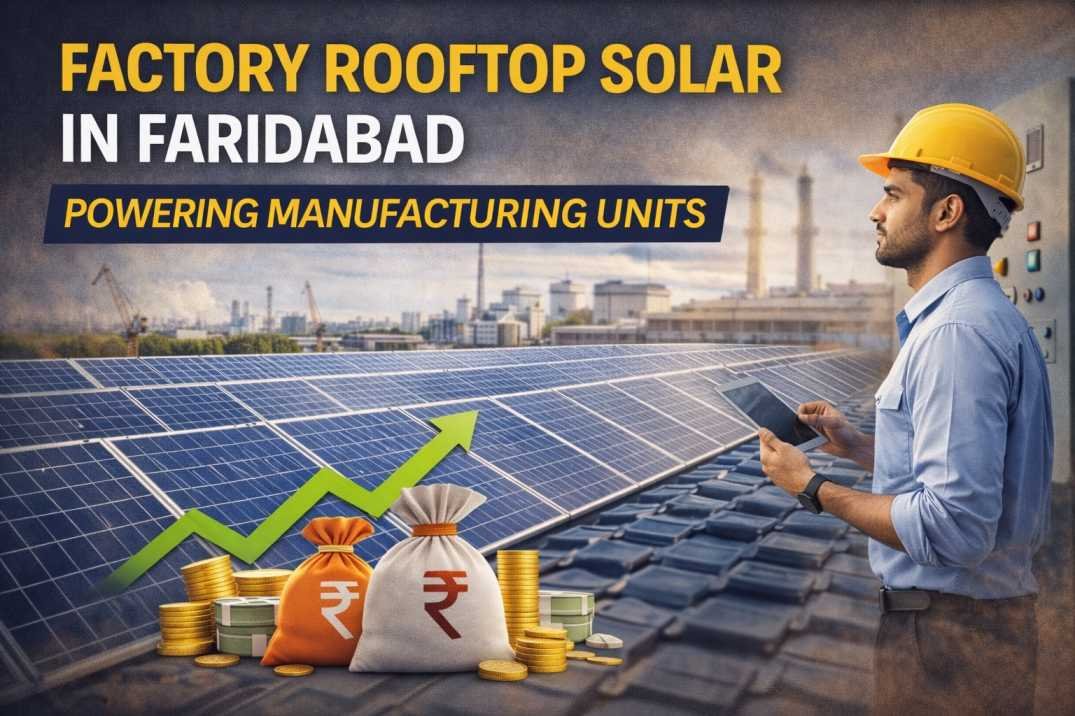
Manufacturing units are the backbone of Faridabad’s industrial economy. From automotive components and heavy engineering to FMCG, textiles, packaging, and electronics, factories in the region operate on tight margins, high energy demand, and continuous production schedules. One challenge cuts across all industries—rising electricity costs and unreliable power supply.
This is why factory rooftop solar Faridabad is rapidly emerging as a strategic energy solution for manufacturing units. Rooftop solar is no longer just an environmental initiative; it is a smart financial and operational decision that helps factories reduce costs, improve energy security, and stay competitive in a rapidly evolving industrial landscape.
This blog explains how factory rooftop solar works, why it is ideally suited for Faridabad’s manufacturing sector, and how it delivers long-term value for industrial businesses.
Why Faridabad Is Ideal for Factory Rooftop Solar
Faridabad is one of Haryana’s largest industrial hubs and part of the Delhi NCR manufacturing belt. Several factors make rooftop solar especially effective here.
The city receives strong solar irradiation for most of the year, allowing factories to generate consistent power. Industrial buildings typically have large, unused rooftop spaces that are structurally suitable for solar panel installation. At the same time, electricity tariffs for industrial consumers continue to rise, making self-generated solar power far more economical than grid electricity.
For factories operating six or seven days a week, rooftop solar aligns perfectly with daytime production cycles when energy demand is highest.
What Is Factory Rooftop Solar?
Factory rooftop solar refers to solar power systems installed on the roofs of manufacturing units to generate electricity for captive consumption. These systems are designed based on a factory’s load profile, roof area, structural capacity, and future expansion plans.
A typical factory rooftop solar system includes:
- High-efficiency solar panels
- Grid-tied or hybrid inverters
- Mounting structures suitable for industrial roofs
- Safety systems and monitoring equipment
Most factory rooftop solar Faridabad projects are on-grid systems, allowing factories to use solar power during the day while drawing grid power when required.
Why Manufacturing Units Need Rooftop Solar
Manufacturing is energy-intensive. Power costs directly affect production costs, pricing, and profitability. Rooftop solar addresses multiple pain points faced by factories.
Rising Electricity Costs
Industrial power tariffs are among the highest. Solar power offers a fixed-cost energy source for 25 years or more, insulating factories from tariff hikes.
Power Reliability
Voltage fluctuations and outages can damage machinery and disrupt production. Solar systems, especially when combined with smart inverters or hybrid setups, improve power stability.
Margin Pressure
With increasing competition, manufacturers must control operating expenses. Rooftop solar significantly reduces monthly electricity bills, improving margins.
Key Benefits of Factory Rooftop Solar in Faridabad
Significant Reduction in Power Bills
The most immediate benefit of factory rooftop solar Faridabad is cost savings. Solar power generated on-site replaces expensive grid electricity.
Factories typically achieve:
- 30 to 60 percent reduction in electricity bills
- Lower peak demand charges
- Predictable long-term energy costs
For large manufacturing units, this can translate into savings of several lakhs or crores over the system’s lifetime.
Attractive Return on Investment
Factory rooftop solar systems offer strong financial returns.
Key financial highlights:
- Payback period of 3 to 5 years
- System life of 25 years or more
- High internal rate of return compared to traditional investments
After the payback period, the electricity generated is virtually free, creating long-term value for the business.
Efficient Use of Idle Rooftop Space
Factory roofs are often underutilized assets. Installing solar panels converts unused rooftop space into a revenue-generating energy asset without affecting production activities.
There is no need for additional land acquisition, making rooftop solar especially suitable for urban and semi-urban industrial areas like Faridabad.
Improved Energy Security for Production
Manufacturing units rely on consistent power to maintain quality, timelines, and equipment health.
Rooftop solar:
- Reduces dependence on grid supply
- Supports continuous production during daytime
- Minimizes exposure to outages and voltage issues
When integrated with battery storage or diesel generators, solar can further enhance energy reliability.
Net Metering Benefits for Factories
Net metering allows factories to export surplus solar power to the grid and receive credits.
This is particularly beneficial when:
- Production load is lower on certain days
- Solar generation exceeds internal consumption
Net metering ensures that excess energy is not wasted, improving overall project economics for factory rooftop solar Faridabad installations.
Environmental and Compliance Advantages
Reduced Carbon Footprint
Manufacturing industries face increasing pressure to reduce emissions. Rooftop solar significantly lowers carbon output by replacing fossil-fuel-based grid electricity.
This supports:
- Corporate sustainability goals
- ESG compliance
- Environmental reporting requirements
Enhanced Brand and Market Image
Solar-powered factories are viewed as responsible and future-focused. This improves credibility with:
- Global clients and supply chains
- Investors and financial institutions
- Government and regulatory bodies
Sustainability is increasingly becoming a deciding factor in business partnerships.
Types of Factory Rooftop Solar Systems
On-Grid Rooftop Solar
The most common option for factories. Solar power is used during the day, and excess energy is exported to the grid.
Best for:
- Factories with reliable grid access
- Maximum cost savings
- Faster payback
Hybrid Rooftop Solar
Combines solar power, grid electricity, and battery storage.
Best for:
- Units facing frequent power cuts
- Critical manufacturing processes
- Enhanced energy security
Hybrid systems involve higher upfront costs but offer greater operational stability.
Structural and Technical Considerations for Factory Rooftop Solar
Before installing rooftop solar, factories must evaluate technical aspects carefully.
Important considerations include:
- Roof strength and load-bearing capacity
- Shadow-free rooftop area
- Orientation and tilt of panels
- Electrical infrastructure compatibility
- Fire safety and compliance norms
Professional site surveys ensure that factory rooftop solar Faridabad projects are safe, efficient, and compliant.
Government Policies and Incentives
While direct subsidies are limited for industrial users, supportive policies make rooftop solar attractive.
Key benefits include:
- Net metering regulations
- Accelerated depreciation for eligible businesses
- Lower GST on solar components
- Priority lending options from banks and NBFCs
These incentives improve overall project feasibility and returns.
Financing Options for Factory Rooftop Solar
Rooftop solar is no longer limited to businesses with large capital reserves.
Factories can choose from:
- CAPEX model (self-invested installation)
- OPEX or RESCO model (pay-per-unit solar power)
- Bank loans and solar financing
- EMI-based payment options
Flexible financing enables even mid-sized manufacturing units to adopt solar without financial strain.
Common Concerns Factory Owners Have About Rooftop Solar
Will Solar Affect Roof Integrity?
Properly designed mounting structures protect roofs and can even reduce heat load, extending roof life.
Does Solar Work During Monsoon or Winter?
Solar systems are designed based on annual generation. Lower output on some days is balanced by higher output on others.
Is Maintenance Complicated?
Rooftop solar requires minimal maintenance—mainly periodic cleaning and routine inspections.
Importance of Professional EPC Partners
The success of a factory rooftop solar Faridabad project depends heavily on the EPC partner.
A reliable EPC provider ensures:
- Accurate system design
- High-quality panels and inverters
- Safe installation practices
- Performance monitoring and O&M support
Industrial solar systems demand precision, experience, and long-term service commitment.
Long-Term Strategic Value for Manufacturers
Beyond immediate savings, rooftop solar strengthens long-term business resilience.
It helps factories:
- Hedge against energy inflation
- Improve cost predictability
- Increase asset value
- Align with future environmental regulations
Solar power transforms energy from a recurring expense into a strategic advantage.
Final Thoughts
For manufacturing units in Faridabad, rooftop solar is no longer an optional upgrade—it is a strategic investment. Rising electricity costs, competitive pressure, and sustainability expectations make factory rooftop solar Faridabad a powerful solution for industrial growth.
By converting unused rooftop space into a clean energy source, factories can reduce operational costs, secure reliable power, and build a future-ready business. With the right planning, technology, and execution, rooftop solar becomes a long-term asset that powers not just machines, but profitability and sustainability as well.