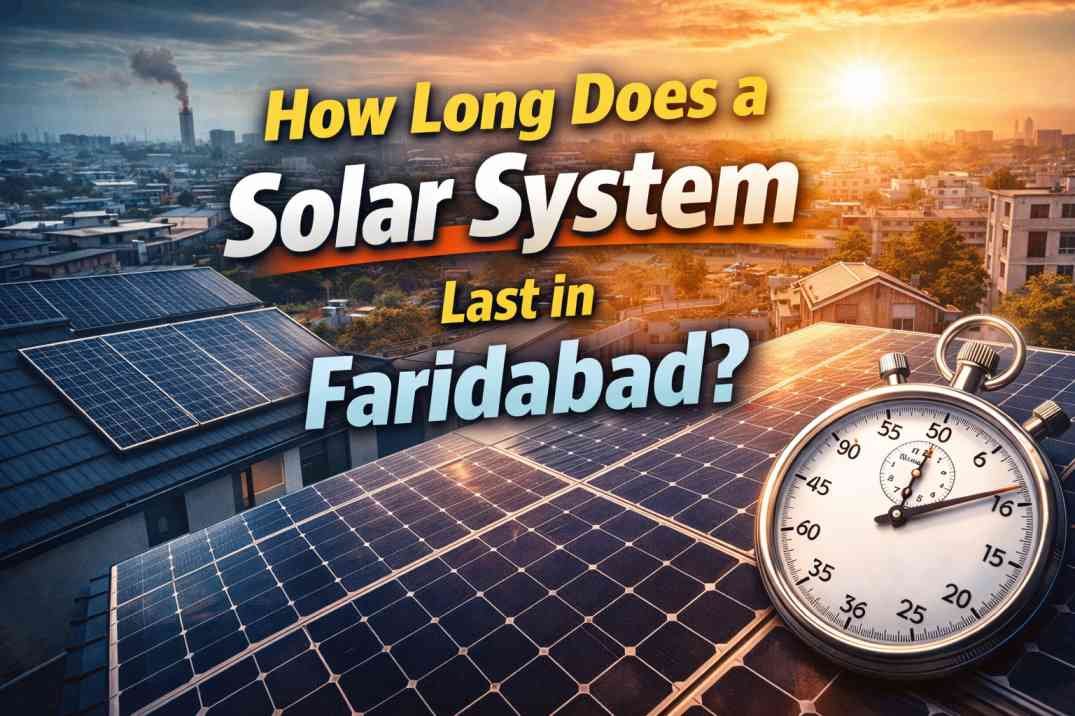
As solar energy adoption continues to rise across India, homeowners and businesses in Faridabad are increasingly investing in solar power systems to reduce electricity bills and contribute to a greener future. One of the most common questions potential buyers ask is: How long does a solar system actually last?
Understanding the solar panel lifespan in Faridabad is essential before making an investment. A solar power system is not just a short-term solution—it is a long-term asset that delivers value for decades when installed and maintained properly.
In this blog, we will explore the lifespan of solar panels, the durability of other system components, and the key factors that influence how long your solar system will perform efficiently in Faridabad’s climate.
Understanding the Lifespan of Solar Panels
Solar panels are designed to be highly durable and long-lasting. On average:
- Most solar panels last 25 to 30 years
- Many continue to generate electricity even beyond 30 years, albeit at reduced efficiency
- Manufacturers typically offer performance warranties of 25 years
This means that when you install a solar system in Faridabad, you are making a long-term investment that can generate power for decades.
However, it is important to understand that solar panels do not suddenly stop working after 25 years. Instead, their efficiency gradually decreases over time.
What Happens After 25 Years?
Solar panels degrade slowly. Most panels experience an average degradation rate of 0.5% to 0.8% per year.
This means:
- After 10 years: ~90–95% efficiency
- After 20 years: ~85–90% efficiency
- After 25 years: ~80–85% efficiency
Even after 25–30 years, your system will still produce electricity, just at a slightly lower output.
Lifespan of Other Solar System Components
A solar power system is made up of more than just panels. Each component has a different lifespan:
1. Solar Inverter
The inverter converts DC electricity into usable AC power.
- Lifespan: 8 to 15 years
- Replacement likely needed once during system lifetime
2. Solar Batteries (if installed)
Used in off-grid or hybrid systems.
- Lifespan: 5 to 12 years, depending on battery type
- Lithium batteries last longer than lead-acid
3. Mounting Structure
- Lifespan: 25+ years
- Built to withstand weather conditions
4. Wiring and Electrical Components
- Lifespan: 20–25 years
- Requires periodic inspection
5. Monitoring Systems
- Lifespan: 10–15 years
Understanding these components helps you plan maintenance and future costs effectively.
Factors Affecting Solar Panel Lifespan in Faridabad
The solar panel lifespan in Faridabad is influenced by several environmental and technical factors.
1. Climate and Weather Conditions
Faridabad experiences:
- High summer temperatures
- Dust and pollution
- Occasional heavy rainfall
While solar panels are designed to handle harsh conditions, prolonged exposure to extreme heat and dust can slightly accelerate wear if not maintained properly.
2. Quality of Installation
Proper installation is critical. Poor installation can lead to:
- Loose wiring
- Improper panel angle
- Water leakage issues
Choosing an experienced provider like JJGJ Solar Pvt Ltd ensures that your system is installed correctly for maximum lifespan and performance.
3. Panel Quality and Technology
Higher-quality panels typically last longer and perform better.
Types include:
- Monocrystalline panels (higher efficiency, longer lifespan)
- Polycrystalline panels (cost-effective, slightly lower efficiency)
Premium brands often offer better warranties and durability.
4. Regular Maintenance
Dust accumulation is a major factor in Faridabad.
Without cleaning:
- Efficiency drops significantly
- Long-term performance may degrade faster
Regular cleaning and inspection can extend system life and maintain optimal output.
5. System Design and Load Management
A well-designed system ensures:
- Balanced energy production
- Reduced strain on components
- Better long-term performance
Oversized or poorly configured systems may reduce efficiency over time.
Importance of Maintenance for Longevity
Maintenance plays a crucial role in maximizing the lifespan of your solar system.
Key Maintenance Practices:
- Cleaning panels every 2–4 weeks (depending on dust levels)
- Checking inverter performance regularly
- Inspecting wiring and connections
- Monitoring system output through apps or dashboards
Professional services like Solar Operation & Maintenance (O&M) and AMC plans can help ensure your system runs efficiently for decades.
How Faridabad’s Environment Impacts Solar Systems
Faridabad’s urban and industrial environment introduces unique challenges:
Dust and Pollution
Dust settles on panels, reducing sunlight absorption.
High Temperatures
Excessive heat can slightly reduce efficiency, though modern panels are heat-resistant.
Monsoon Season
Heavy rains help clean panels naturally but require proper drainage and mounting.
Despite these factors, solar systems perform very well in Faridabad due to abundant sunlight throughout the year.
Return on Investment Over Time
One of the biggest advantages of solar systems is their long-term financial benefit.
Typical ROI Timeline:
- Payback period: 4 to 6 years
- Remaining lifespan: 20+ years of free electricity
This means that most of your solar system’s life is spent generating savings.
Even with gradual efficiency decline, the system continues to provide strong returns.
Signs Your Solar System Needs Attention
Over time, certain signs may indicate the need for maintenance or upgrades:
- Sudden drop in energy production
- Inverter errors or shutdowns
- Physical damage to panels
- Loose wiring or connections
Regular monitoring helps detect these issues early.
Can Solar Panels Last More Than 30 Years?
Yes, many solar systems continue working beyond 30 years.
However:
- Efficiency will be lower
- Some components may need replacement
- Upgrading to newer technology may be more beneficial
With proper care, your system can remain functional for decades.
Tips to Maximize Solar Panel Lifespan
To get the best out of your solar investment:
- Choose high-quality panels and components
- Ensure professional installation
- Clean panels regularly
- Invest in AMC or maintenance services
- Monitor system performance consistently
- Replace inverters and batteries when needed
Following these steps can significantly extend the solar panel lifespan in Faridabad.
Why Professional Installation Matters
Working with an experienced company ensures:
- Proper system design
- Correct panel orientation and tilt
- Secure mounting and wiring
- Compliance with safety standards
Companies like JJGJ Solar Pvt Ltd provide end-to-end solutions—from consultation to installation and maintenance—ensuring long-term reliability.
Future of Solar Energy in Faridabad
With rising electricity costs and increasing environmental awareness, solar energy adoption in Faridabad is expected to grow rapidly.
Government initiatives, net metering policies, and financing options are making solar systems more accessible than ever.
As technology advances, newer panels will become even more efficient and durable, further increasing lifespan and performance.
Conclusion
The solar panel lifespan in Faridabad typically ranges between 25 to 30 years, making it a reliable and long-term investment for homeowners and businesses. While solar panels gradually lose efficiency over time, they continue to generate electricity well beyond their warranty period.
Factors such as installation quality, maintenance, environmental conditions, and component durability all play a crucial role in determining how long your system will last.
By choosing the right solar provider, maintaining your system regularly, and using high-quality components, you can ensure decades of clean, cost-effective energy.
Investing in solar is not just about saving money—it is about securing a sustainable future powered by renewable energy.