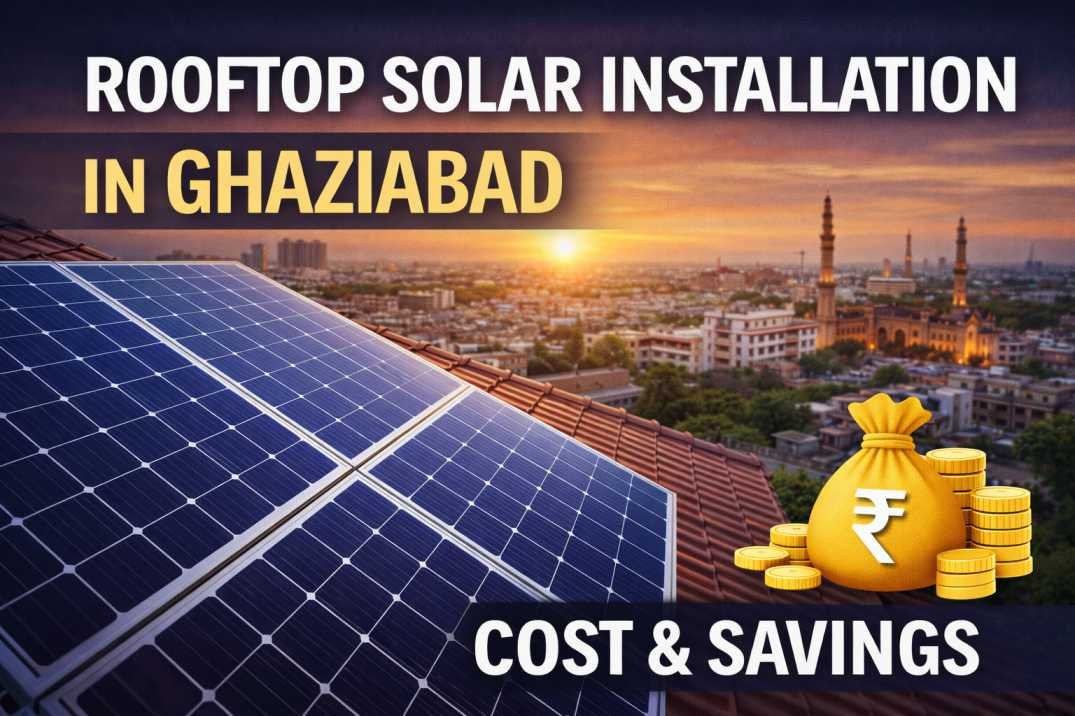
With rising electricity costs and increasing awareness about sustainable energy, rooftop solar systems are becoming a popular choice for homeowners and businesses in Ghaziabad. Solar energy provides a reliable and environmentally friendly alternative to traditional power sources while helping consumers significantly reduce their electricity bills. As the demand for clean energy grows across India, rooftop solar installation in Ghaziabad is emerging as a practical and cost-effective solution for residential, commercial, and industrial properties.
Ghaziabad, located in the National Capital Region (NCR), experiences abundant sunlight throughout the year, making it an ideal location for solar energy generation. Installing rooftop solar panels allows property owners to harness this natural resource and convert sunlight into electricity that powers homes, offices, and factories. Understanding the cost, savings, and benefits of rooftop solar installation can help residents make informed decisions about switching to solar energy.
Understanding Rooftop Solar Power Systems
A rooftop solar power system consists of solar panels installed on the roof of a building to generate electricity using sunlight. These panels capture solar energy and convert it into direct current electricity through photovoltaic cells. An inverter then converts this electricity into alternating current, which can be used to power appliances and electrical systems within the property.
Rooftop solar systems are designed to operate efficiently for many years with minimal maintenance. They are available in different configurations depending on the energy needs of the property.
The most common types include on-grid systems, off-grid systems, and hybrid solar systems. On-grid systems are connected to the main electricity grid and allow users to export excess electricity back to the grid through net metering. Off-grid systems operate independently and store energy in batteries for use when sunlight is not available. Hybrid systems combine the features of both on-grid and off-grid systems, offering flexibility and backup power during outages.
Why Rooftop Solar Installation Is Growing in Ghaziabad
Ghaziabad has witnessed rapid urban development in recent years, with increasing residential societies, commercial buildings, and industrial facilities. As electricity demand grows, many property owners are exploring alternative energy sources to reduce costs and ensure uninterrupted power supply.
Rooftop solar installation in Ghaziabad offers several advantages. The region receives ample sunlight for most of the year, allowing solar panels to generate sufficient electricity for daily use. In addition, government initiatives and solar subsidy programs have made solar systems more affordable for consumers.
Environmental awareness is another factor driving solar adoption. Many individuals and businesses are choosing solar energy to reduce their carbon footprint and contribute to a cleaner environment.
Cost of Rooftop Solar Installation in Ghaziabad
The cost of rooftop solar installation in Ghaziabad depends on several factors, including system capacity, type of solar panels, installation complexity, and additional components such as inverters and mounting structures.
For residential properties, a typical solar system ranges from one kilowatt to five kilowatts depending on the household’s electricity consumption. A one-kilowatt solar system generally costs between sixty thousand and eighty thousand rupees. A three-kilowatt system may cost between one lakh eighty thousand and two lakh forty thousand rupees.
A five-kilowatt rooftop solar system, which is suitable for medium-sized homes or small businesses, may cost between three lakh and three lakh fifty thousand rupees depending on the quality of components and installation requirements.
Commercial and industrial solar installations usually involve larger systems ranging from ten kilowatts to several hundred kilowatts. The cost per kilowatt typically decreases as the system size increases due to economies of scale.
Government subsidies can significantly reduce the upfront cost of solar installation for residential consumers.
Government Subsidies and Incentives
The Government of India and state authorities have introduced several initiatives to encourage solar adoption. These programs aim to promote renewable energy and reduce dependence on fossil fuels.
Residential consumers installing rooftop solar systems may be eligible for subsidies under government schemes. These subsidies can reduce the installation cost by a significant percentage depending on the system capacity.
Net metering is another important benefit for solar users. With net metering, excess electricity generated by the solar system can be exported to the grid. The electricity meter records both the electricity consumed and the electricity supplied to the grid, allowing consumers to receive credits on their electricity bills.
These incentives make rooftop solar installation in Ghaziabad more affordable and financially attractive for homeowners.
Savings on Electricity Bills
One of the biggest advantages of installing rooftop solar panels is the reduction in electricity bills. Once the system is installed, it generates free electricity from sunlight, significantly lowering monthly energy expenses.
For example, a three-kilowatt solar system can generate approximately twelve to fifteen units of electricity per day under ideal conditions. This can cover a large portion of the electricity needs of an average household.
Over time, the savings from reduced electricity bills can recover the initial investment in the solar system. Most rooftop solar systems have a payback period of four to six years depending on electricity consumption and local tariff rates.
Since solar panels have a lifespan of twenty-five years or more, property owners can enjoy decades of low-cost electricity after recovering their investment.
Environmental Benefits of Rooftop Solar Energy
Rooftop solar systems help reduce the reliance on conventional electricity generated from fossil fuels such as coal and natural gas. By generating clean energy, solar power significantly lowers greenhouse gas emissions and environmental pollution.
Every kilowatt of solar power installed can reduce carbon emissions by several hundred kilograms each year. As more households and businesses adopt solar energy, the collective impact can contribute to a cleaner and healthier environment.
Solar energy also reduces the strain on traditional power grids, helping improve energy sustainability for future generations.
Factors That Affect Rooftop Solar Installation Cost
Several factors influence the cost of rooftop solar installation in Ghaziabad.
System capacity is one of the primary factors. Larger systems require more solar panels, inverters, and mounting structures, which increases the overall cost.
The quality of solar panels also affects pricing. High-efficiency panels may cost more initially but can generate more electricity and offer better long-term performance.
Roof structure and installation complexity also play a role. Roof orientation, shading from nearby buildings, and structural design can impact installation requirements.
Additional components such as batteries for energy storage may increase the total cost but provide backup power during outages.
Installation labor, permits, and electrical connections also contribute to the final installation cost.
Maintenance of Rooftop Solar Systems
Rooftop solar systems require minimal maintenance compared to other power generation technologies. Regular cleaning of solar panels is important to ensure optimal performance.
Dust, dirt, and debris can accumulate on the surface of solar panels and reduce their efficiency. Cleaning the panels periodically helps maintain maximum energy production.
Routine inspections by professionals can help detect potential issues early and ensure the system continues to operate efficiently.
Solar panels are designed to withstand harsh weather conditions and typically require little maintenance over their lifetime.
Rooftop Solar for Residential Properties
Homeowners in Ghaziabad are increasingly installing rooftop solar systems to reduce electricity bills and achieve energy independence.
Residential solar installations are usually designed based on the household’s electricity consumption and roof space availability. A well-designed system can power essential appliances such as lights, fans, air conditioners, refrigerators, and electronic devices.
Many residential societies are also adopting community solar projects to generate shared electricity for common areas such as elevators, lighting, and security systems.
Rooftop Solar for Commercial and Industrial Buildings
Commercial and industrial properties consume large amounts of electricity, making them ideal candidates for solar energy solutions.
Businesses can significantly reduce operating costs by installing rooftop solar panels on factories, warehouses, office buildings, and retail establishments.
Solar energy also enhances corporate sustainability initiatives by reducing carbon emissions and promoting environmentally responsible practices.
Many businesses in Ghaziabad are adopting solar power to achieve long-term energy savings and improve brand reputation.
Choosing the Right Solar Installation Company
Selecting the right solar installation provider is crucial for the success of a rooftop solar project. Experienced companies ensure proper system design, quality installation, and reliable after-sales support.
Professional solar companies conduct site inspections, analyze energy consumption patterns, and recommend the most suitable system capacity for the property.
They also assist with government approvals, subsidy applications, and net metering processes, making the transition to solar energy smoother for customers.
Quality materials, certified technicians, and reliable warranties are important factors to consider when choosing a solar installation provider.
Future of Rooftop Solar in Ghaziabad
The future of rooftop solar installation in Ghaziabad looks extremely promising. As technology improves and solar equipment becomes more affordable, the adoption of solar energy is expected to increase rapidly.
Government initiatives aimed at promoting renewable energy will further accelerate the growth of rooftop solar installations in urban areas.
Innovations such as smart energy management systems, advanced solar panels, and battery storage technologies will make solar power even more efficient and accessible.
As awareness grows and more people recognize the economic and environmental benefits of solar energy, rooftop solar systems will play a major role in shaping the region’s energy future.
Conclusion
Rooftop solar installation in Ghaziabad is a practical and financially rewarding investment for homeowners, businesses, and industries. With abundant sunlight, government incentives, and rising electricity costs, solar energy offers a reliable solution for reducing power expenses and promoting environmental sustainability.
Although the initial installation cost may seem significant, the long-term savings and environmental benefits make solar power a smart choice. By choosing a reliable solar installation company and taking advantage of available subsidies, property owners can enjoy clean and affordable electricity for many years.
As Ghaziabad continues to grow and embrace sustainable energy solutions, rooftop solar systems will play a key role in building a greener and more energy-efficient future.