
As electricity costs continue to rise and environmental awareness grows, more homeowners and businesses in Faridabad are turning to solar energy. One of the most important concepts that makes solar power financially attractive is net metering. If you are planning to install a solar system or already have one, understanding how net metering works can help you maximize your savings and efficiency.
This comprehensive guide explains net metering in Faridabad, how it works, its benefits, eligibility, process, and everything you need to know before installing a solar power system.
What is Net Metering?
Net metering is a billing mechanism that allows solar power users to export excess electricity generated by their solar panels to the grid. In return, they receive credits that reduce their electricity bills.
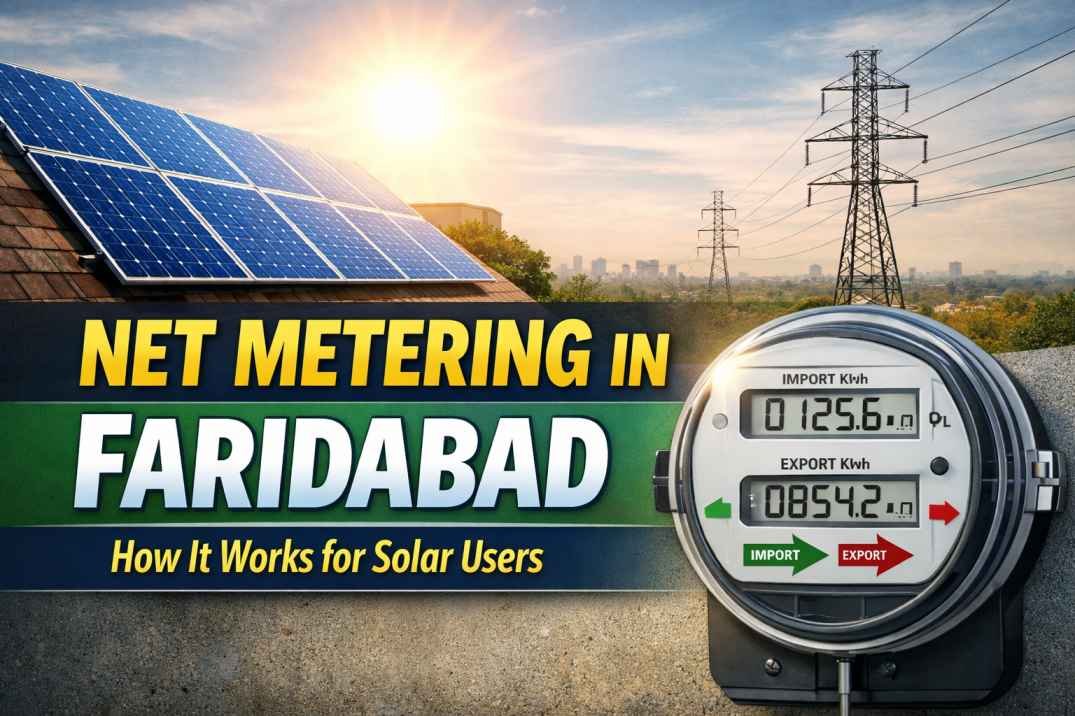
In simple terms, when your solar system produces more energy than you consume, the extra power is sent back to the electricity grid. When your system produces less power, especially at night, you draw electricity from the grid. The net meter records both import and export of electricity.
At the end of the billing cycle, you are charged only for the net electricity consumption.
Why Net Metering is Important in Faridabad
Faridabad, being part of the Delhi NCR region, experiences high electricity consumption due to extreme summers and increasing urbanization. Net metering plays a crucial role in making solar energy more practical and cost-effective.
Key reasons why net metering in Faridabad is gaining popularity:
- Reduces electricity bills significantly
- Makes solar investment financially viable
- Encourages use of renewable energy
- Supports grid stability
- Helps users achieve faster return on investment
With supportive policies and growing awareness, more residential and commercial users are opting for solar systems with net metering.
How Net Metering Works
To understand net metering in Faridabad, let’s break down the process step by step:
1. Solar Power Generation
Solar panels installed on your rooftop generate electricity during the day using sunlight.
2. Electricity Consumption
The generated electricity is first used to power your home or business.
3. Excess Power Export
If your solar system produces more electricity than you consume, the surplus energy is exported to the grid.
4. Importing Power from Grid
During nighttime or low sunlight conditions, your system draws electricity from the grid.
5. Net Meter Calculation
A bidirectional (net) meter tracks:
- Units consumed from the grid
- Units exported to the grid
At the end of the billing period, your bill reflects the net consumption.
Types of Solar Systems in Net Metering
On-Grid Solar System
This is the most common system used with net metering. It is connected to the grid and allows export and import of electricity.
Off-Grid Solar System
This system is not connected to the grid and uses batteries to store power. Net metering is not applicable here.
Hybrid Solar System
A combination of on-grid and off-grid systems, allowing both grid connectivity and battery backup. Net metering can still be used in such systems.
Eligibility for Net Metering in Faridabad
To apply for net metering in Faridabad, certain criteria must be met:
- You must own a property (residential, commercial, or industrial)
- The rooftop should be suitable for solar installation
- The system capacity should be within the approved limits
- The installation must comply with local DISCOM guidelines
- The solar system must be installed by an approved vendor
Different electricity distribution companies may have specific requirements, so it is important to verify the latest guidelines.
Documents Required
When applying for net metering, you typically need:
- Electricity bill (latest copy)
- Identity proof
- Address proof
- Property ownership documents
- Technical details of the solar system
- Application form
Your solar EPC provider usually assists in preparing and submitting these documents.
Net Metering Process in Faridabad
Here is a step-by-step overview of the process:
Step 1: Site Inspection and Feasibility
A solar expert evaluates your rooftop and energy consumption to determine system size.
Step 2: Application Submission
An application is submitted to the local electricity authority for net metering approval.
Step 3: Approval and Sanction
The DISCOM reviews the application and provides approval.
Step 4: Solar Installation
The solar system is installed according to approved specifications.
Step 5: Net Meter Installation
A bidirectional net meter is installed to track electricity flow.
Step 6: Inspection and Commissioning
Final inspection is conducted before activating the system.
Benefits of Net Metering in Faridabad
1. Significant Cost Savings
One of the biggest advantages is reduced electricity bills. Users can save up to 70–90% on energy costs depending on system size and usage.
2. Faster Return on Investment
Net metering allows you to recover your solar investment faster by maximizing energy utilization.
3. Efficient Energy Use
No energy goes to waste. Excess power is exported and credited instead of being lost.
4. Environmentally Friendly
Solar energy reduces reliance on fossil fuels and lowers carbon emissions.
5. Low Maintenance
On-grid solar systems with net metering require minimal maintenance compared to battery-based systems.
Net Metering vs Gross Metering
Understanding the difference is important:
Net Metering:
- You consume solar power first
- Excess power is exported
- You pay for net consumption
Gross Metering:
- Entire solar generation is exported to the grid
- You are paid for total generation
- You buy electricity separately
Net metering is generally more beneficial for residential and commercial users in Faridabad.
Factors Affecting Savings
Savings from net metering depend on several factors:
- Size of the solar system
- Electricity consumption patterns
- Tariff rates
- Sunlight availability
- System efficiency
Proper system design ensures maximum benefits.
Common Challenges and Solutions
1. Approval Delays
Sometimes approvals take time due to documentation or technical issues.
Solution: Work with experienced solar providers who handle approvals efficiently.
2. Incorrect System Sizing
Oversized or undersized systems can reduce efficiency.
Solution: Conduct proper load analysis before installation.
3. Technical Issues
Poor installation can affect performance.
Solution: Choose certified installers with proven experience.
Government Policies and Support
The Indian government actively promotes solar energy through subsidies and supportive policies. While subsidies may vary, net metering remains a key incentive for adopting rooftop solar systems.
Users are encouraged to stay updated with local regulations to take full advantage of available benefits.
Tips for Maximizing Net Metering Benefits
- Install the right system size based on your consumption
- Maintain panels regularly for better efficiency
- Use energy during daytime to reduce grid dependency
- Monitor system performance
- Choose high-quality components
Future of Net Metering in Faridabad
With increasing focus on renewable energy and sustainability, net metering is expected to grow rapidly in Faridabad. As more households and businesses adopt solar power, the region will move closer to energy independence.
Advancements in solar technology and supportive policies will further enhance the benefits of net metering.
Final Thoughts
Net metering in Faridabad is a powerful tool that makes solar energy more practical, affordable, and rewarding. By allowing users to export excess electricity and reduce their bills, it ensures maximum utilization of solar power.
Whether you are a homeowner looking to cut electricity costs or a business aiming for sustainable operations, net metering offers a smart and efficient solution.
Understanding the process, benefits, and requirements can help you make informed decisions and unlock the full potential of solar energy. Investing in solar with net metering is not just a financial decision—it is a step toward a cleaner and more sustainable future.