
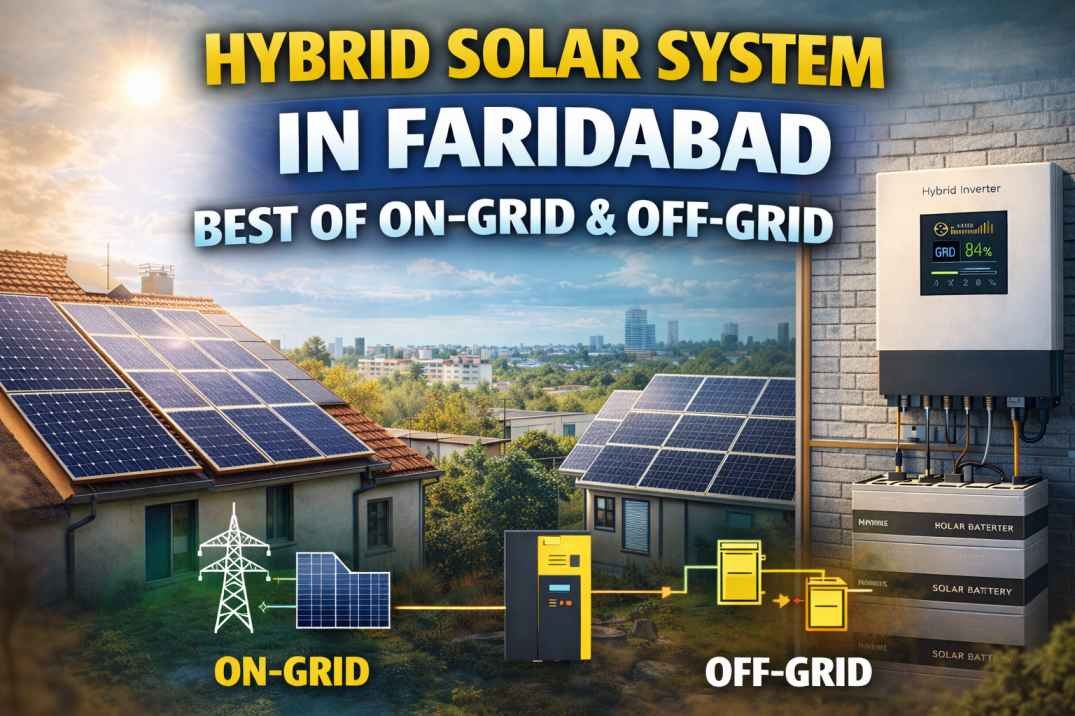
With rising electricity costs, frequent power cuts, and growing awareness of clean energy, solar power has become a preferred solution for homes and businesses. Among the different solar options available today, the hybrid solar system in Faridabad is gaining significant popularity. It combines the advantages of both on-grid and off-grid systems, offering uninterrupted power, energy savings, and long-term reliability.
This blog explains what a hybrid solar system is, how it works, its benefits, costs, applications, and why it is an ideal choice for Faridabad’s residential, commercial, and industrial users.
Understanding the Power Scenario in Faridabad
Faridabad is one of Haryana’s most important industrial and residential hubs. With rapid urban development, increasing industrial activity, and expanding residential societies, electricity demand in the city continues to grow.
Common challenges faced by consumers include:
- Rising electricity tariffs
- Power outages during peak summer months
- Dependence on diesel generators or inverters
- High operational costs for businesses
These challenges make solar energy not just an alternative, but a necessity. A hybrid solar system offers a smart, future-ready solution.
What Is a Hybrid Solar System?
A hybrid solar system is an advanced solar power solution that combines:
- Solar panels
- A hybrid solar inverter
- Battery storage
- Grid connectivity
Unlike traditional systems, a hybrid setup allows you to generate solar power, store excess energy in batteries, and remain connected to the electricity grid. This ensures power availability even during grid failures while maximizing savings when the grid is active.
This is why many homeowners and businesses are choosing a hybrid solar system in Faridabad for energy independence and reliability.
How a Hybrid Solar System Works
The functioning of a hybrid solar system can be understood in four simple steps:
- Solar Power Generation
Solar panels capture sunlight and convert it into electricity. - Power Usage Priority
The generated solar power is first used to run your appliances. - Battery Charging
Excess solar energy is stored in batteries for later use. - Grid Interaction
If batteries are full, extra power is exported to the grid. During low solar generation, power is drawn from the grid.
This intelligent energy flow ensures zero power wastage and uninterrupted electricity supply.
Difference Between On-Grid, Off-Grid, and Hybrid Solar Systems
Understanding the differences helps in making the right decision.
On-Grid Solar System
- Connected to the electricity grid
- No battery backup
- Lower initial cost
- No power during grid outages
Off-Grid Solar System
- Completely independent of the grid
- Requires large battery banks
- Higher cost and maintenance
- Ideal for remote locations
Hybrid Solar System
- Connected to the grid with battery backup
- Power available during outages
- Efficient energy management
- Balanced cost and performance
For urban areas like Faridabad, hybrid systems offer the best balance of savings, backup, and reliability.
Key Benefits of a Hybrid Solar System in Faridabad
Uninterrupted Power Supply
Frequent power cuts can disrupt homes and businesses. A hybrid solar system ensures continuous power by switching seamlessly between solar, battery, and grid supply.
Reduced Electricity Bills
By using solar power during the day and stored energy at night, dependency on grid electricity reduces significantly, leading to lower monthly bills.
Net Metering Advantage
Excess solar power exported to the grid can earn credits through net metering, further reducing electricity costs.
Battery Backup Without Full Off-Grid Cost
Hybrid systems provide battery backup without the need for oversized battery banks, making them more affordable than off-grid systems.
Environment-Friendly Solution
Using solar energy reduces carbon emissions and dependence on fossil fuels, contributing to a cleaner environment.
Energy Independence
Hybrid systems protect users from power tariff hikes and grid instability, offering long-term energy security.
Applications of Hybrid Solar Systems
Residential Homes
Independent houses, villas, and apartments in Faridabad benefit from uninterrupted power for lighting, fans, appliances, and home offices.
Commercial Establishments
Offices, malls, schools, hospitals, and retail stores use hybrid systems to ensure smooth operations during outages.
Industrial Units
Factories and warehouses rely on hybrid solar systems to minimize downtime, reduce generator usage, and control operational costs.
Cost of Hybrid Solar System in Faridabad
The cost of a hybrid solar system depends on several factors:
- System capacity (kW)
- Battery type and capacity
- Inverter brand and efficiency
- Roof size and structure
- Installation complexity
Approximate cost range:
- 3 kW hybrid system: Suitable for small homes
- 5–10 kW hybrid system: Ideal for large homes and offices
- 20 kW and above: Best for commercial and industrial units
Though the initial investment is higher than on-grid systems, long-term savings and backup benefits make hybrid systems cost-effective.
Battery Options for Hybrid Solar Systems
Choosing the right battery is crucial for system performance.
Lead-Acid Batteries
- Lower upfront cost
- Shorter lifespan
- Higher maintenance
Lithium-Ion Batteries
- Longer lifespan
- Faster charging
- Compact and maintenance-free
- Higher initial cost but better long-term value
Most modern hybrid solar installations in Faridabad prefer lithium-ion batteries due to efficiency and durability.
Government Subsidies and Policies
Residential users may be eligible for solar subsidies as per government policies. Net metering policies in Haryana further enhance the benefits of installing solar systems.
Subsidy availability depends on:
- System type
- Capacity
- Approved installation standards
A professional solar EPC provider can guide users through subsidy and net metering processes.
Why Hybrid Solar Systems Are Ideal for Faridabad
Faridabad’s climate offers ample sunlight throughout the year, making solar power highly efficient. Combined with frequent power fluctuations and high electricity consumption, hybrid solar systems provide an ideal solution.
Key reasons include:
- High solar potential
- Urban and industrial power demand
- Need for power backup
- Rising electricity tariffs
Choosing the Right Hybrid Solar System Provider
Selecting an experienced solar company ensures optimal system design and performance.
Look for:
- Proven solar EPC experience
- Customized system design
- Quality components and warranties
- Skilled installation team
- Reliable after-sales support
A well-designed system ensures maximum return on investment and long-term reliability.
Maintenance and Performance Monitoring
Hybrid solar systems require minimal maintenance:
- Periodic panel cleaning
- Battery health monitoring
- Inverter performance checks
With proper maintenance, systems can operate efficiently for 25 years or more.
Return on Investment and Payback Period
Most hybrid solar systems recover their cost within 4–6 years, depending on usage and system size. After payback, electricity generation is virtually free, delivering long-term savings.
Future of Hybrid Solar Systems in India
With advancements in battery technology, smart inverters, and energy management systems, hybrid solar solutions are becoming more efficient and affordable. As power demand rises, hybrid systems will play a major role in India’s clean energy transition.
Final Thoughts
A hybrid solar system in Faridabad offers the perfect combination of cost savings, power backup, and environmental responsibility. By combining the benefits of on-grid and off-grid systems, hybrid solar solutions ensure uninterrupted electricity, reduced bills, and long-term energy security.
For homeowners, businesses, and industries looking to future-proof their power needs, investing in a hybrid solar system is a smart and sustainable decision that delivers value for decades to come.